Search & security
AEO and AI visibility
More and more people ask an AI assistant instead of searching. Answer engine optimization (AEO) is about making sure those assistants can find your site, understand it and name it in their answers. Or, if you prefer, keep them out.
What AEO is
AI assistants such as ChatGPT, Claude and Perplexity read the web with their own crawlers. Many of them don't run JavaScript, so a site that builds its content in the browser can look empty to them. A pepita site is plain HTML with its content already in the page, which gives it a head start.
The six checks
The AEO gauge in Site Health scores six things:
sitemap.xml lists your pages.Improve site health fixes the ones it can.
AI visibility
Each site has an AI visibility switch under Settings → Advanced. It is on for new sites.
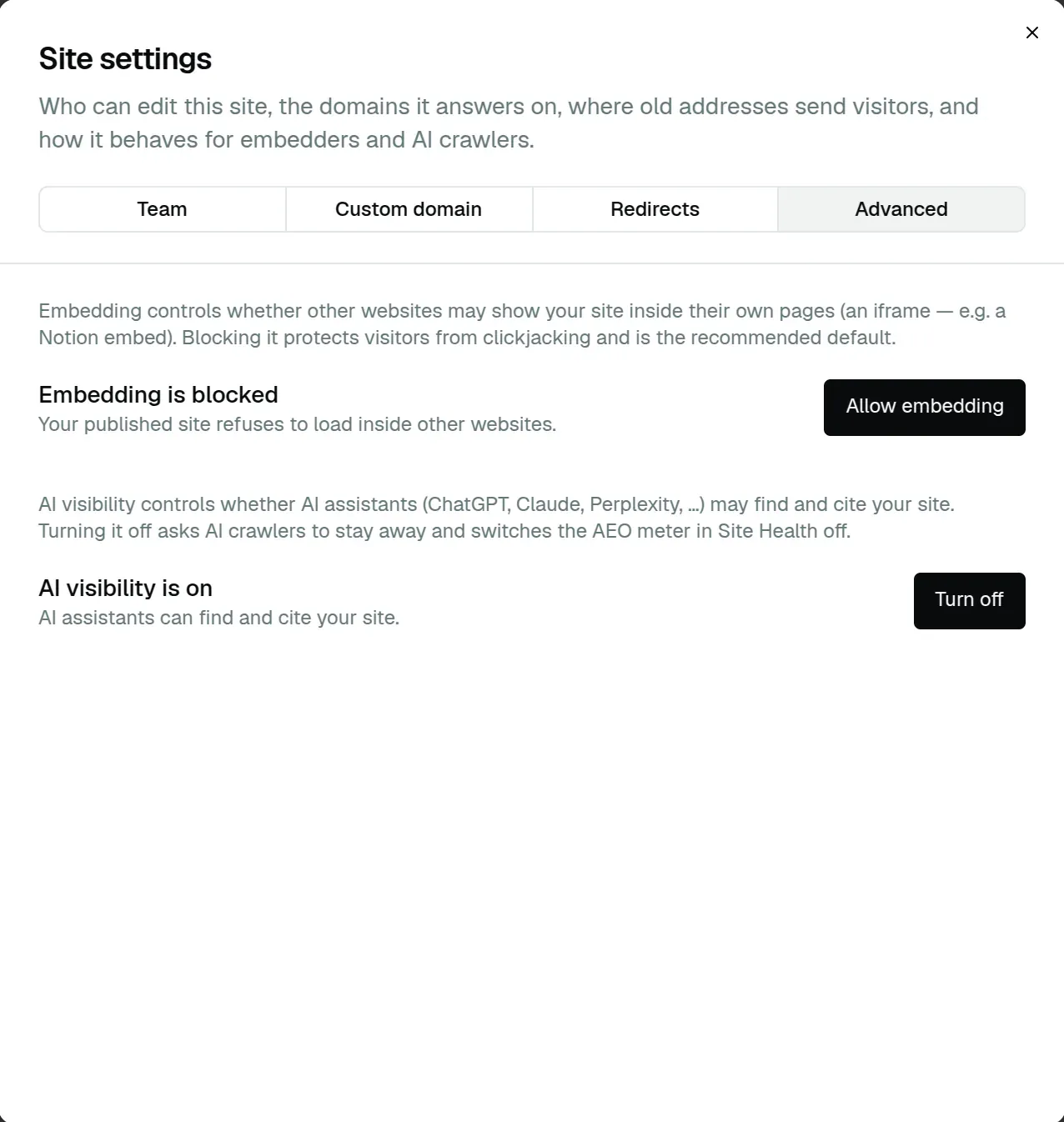
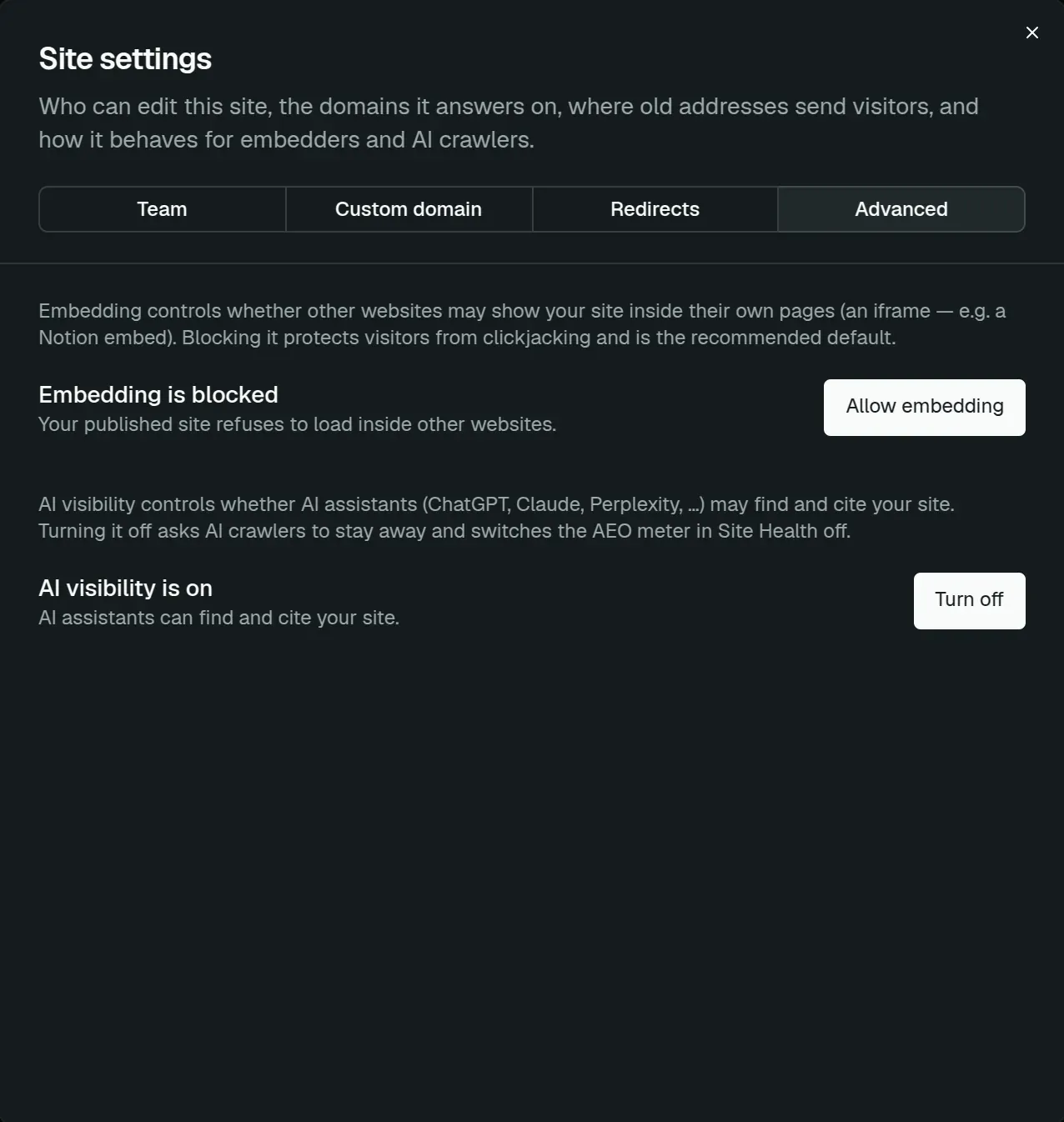
Turn it off and pepita adds rules to your site's robots.txt, above your own:
Content-Signal: search=yes, ai-train=no, ai-input=no- Search stays on. Google and Bing keep indexing your site as before.
- AI training and AI answers are refused, both through that signal and by asking the major AI crawlers by name to stay away.
- It takes effect immediately, with no publish needed, and the AEO gauge switches off.
Crawlers that respect robots.txt follow it. Like any robots.txt rule, it is a request rather than a lock.
Getting cited
- Answer real questions plainly. A short, direct answer near the top of a page is easy for an assistant to quote.
- Say who you are and where. Business name, location, opening hours and prices in plain text, and in JSON-LD.
- One topic per page. A page about one thing is easier to cite than a page about everything.
- Keep it current. Assistants prefer pages that look maintained.