Search & security
Security headers and CSP
Every pepita site is served over HTTPS with a sensible set of security headers.
When you want more, a _headers file and a generated Content-Security-Policy take
your site to the top of the Security score, without a server to configure.
The _headers file
A file called _headers in the root of your site sets HTTP response headers
for the addresses you choose. It uses the same syntax as Cloudflare Pages and Netlify:
an address pattern, then indented Name: value lines.
/*
  Permissions-Policy: camera=(), microphone=()

/downloads/*
  Cache-Control: public, max-age=86400
pepita checks every header against a list of the ones that are safe to set, and drops any it does not allow. Like redirects, headers apply on the live site and on preview links, not in the editor's own preview.
Content-Security-Policy
A Content-Security-Policy tells browsers which scripts, styles and images your page may load, which blocks most injected code. It is also part of the Security score in Site Health.
You don't have to write one by hand. In Improve site health,
pepita records what your site actually loads while you click through it, then writes a
policy that allows exactly that into _headers. You confirm before anything is
written, and nothing goes live until you publish.
'nonce-PEPITA_CSP_NONCE' in script-src. pepita replaces it with a
fresh random value on every response and stamps the same value on each of your inline
<script> tags, so editing a script never breaks it.Always try a new policy on a preview link before you publish. A policy that is too strict blocks things on your own page, and the preview shows you that before your visitors see it.
Always on
Every pepita site is served over HTTPS with HSTS and a standard set of security headers, with no configuration. HSTS can't be changed. The Security gauge in Site Health grades the result the way Mozilla Observatory does.
Embedding
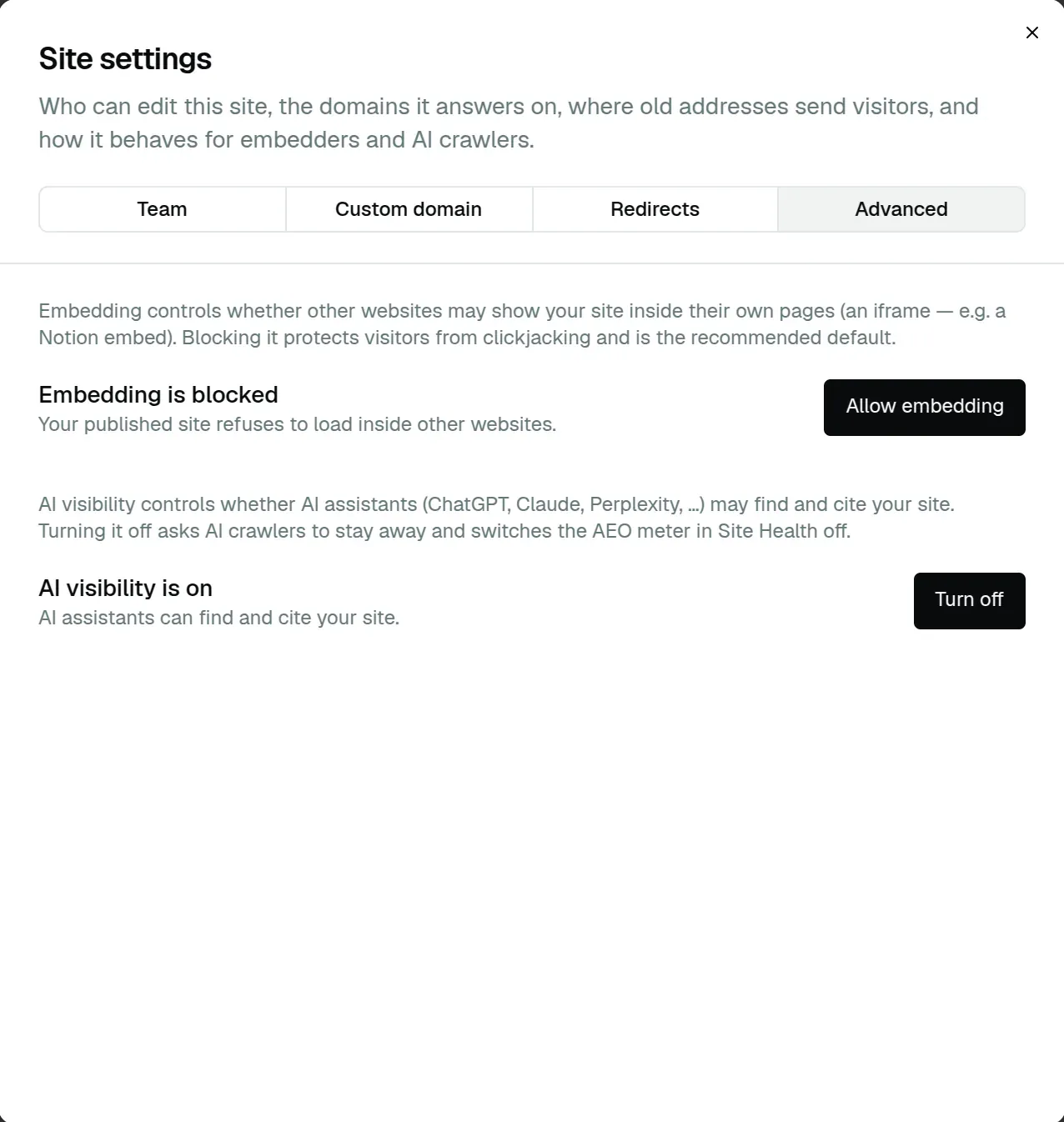
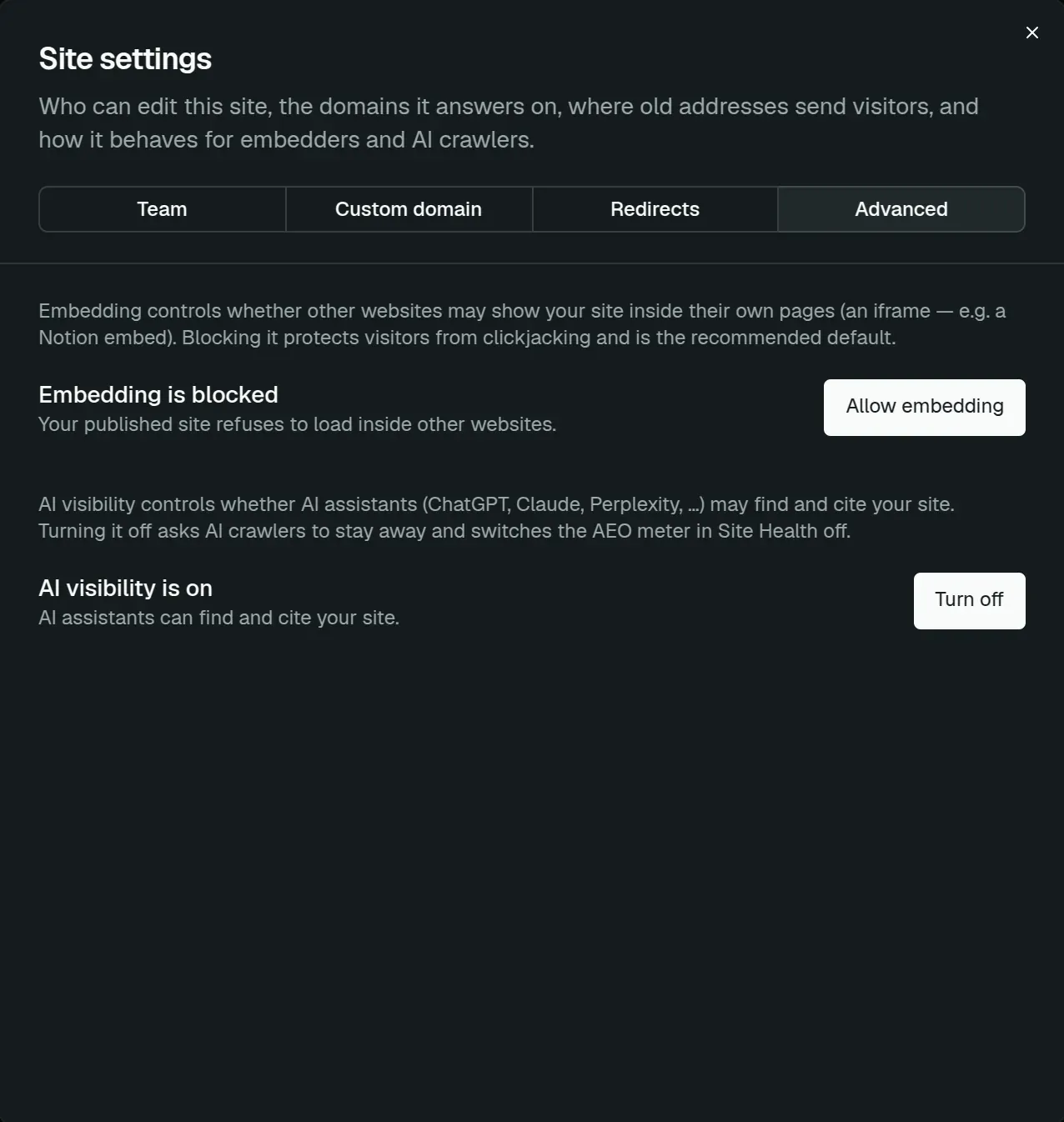
Under Settings → Advanced you choose whether other websites may show your site inside a frame, with Allow embedding or Block embedding. New sites block it, which protects you from clickjacking. Allow it only if you mean to embed your site somewhere else.
The full technical contract is on the developer page, and your
AI can read it with the get_building_guide tool.